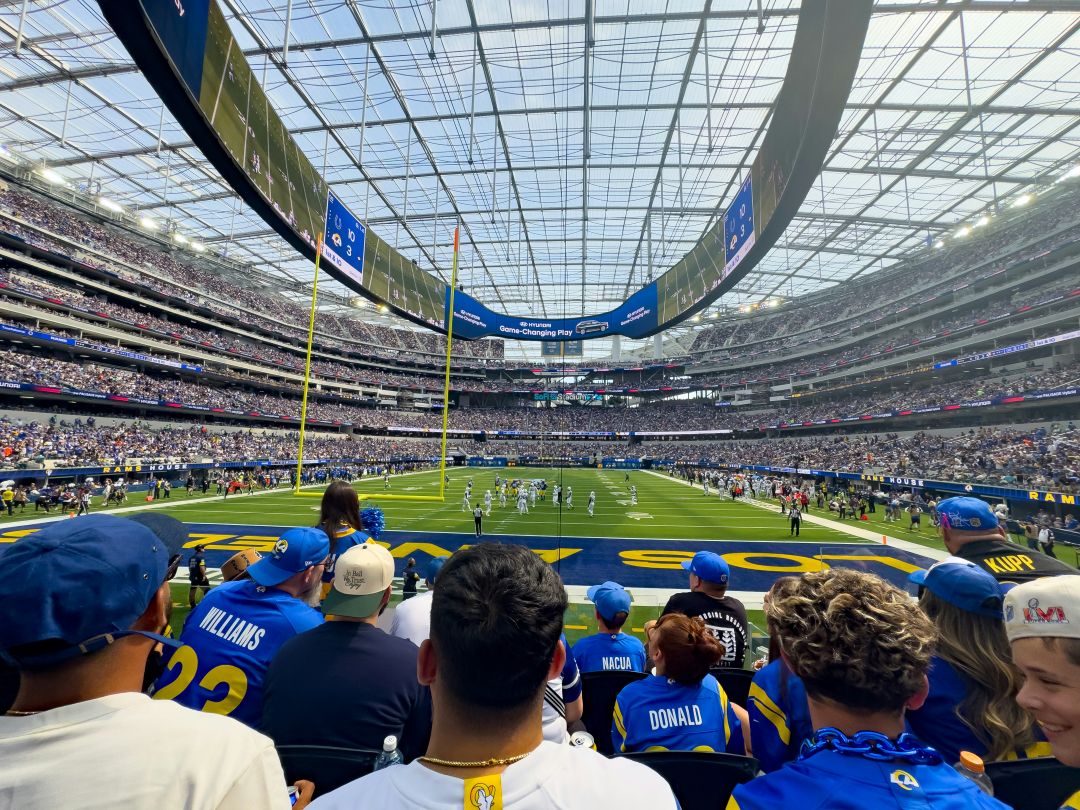
The Arizona Cardinals walked into SoFi Stadium on September 13 as 9.5 point underdogs and walked out with a 26 to 14 win over the Chargers, the worst upset of the NFL’s opening weekend, as our own report from Inglewood put it. Any Cardinals fan in the stands who had backed their team on a phone back home in Phoenix was holding a legal, winning bet. A Chargers fan from Brentwood sitting two rows away could not have placed that wager anywhere in California.
That gap keeps growing. On April 9, Wisconsin Gov. Tony Evers signed a bill that makes his state the 33rd to legalize sports wagering on phones, according to the Associated Press. Nobody in Wisconsin can place a bet on a phone yet, and there is still no launch date, so anyone who wants to follow how online sports betting in Wisconsin moves from law to working apps can track the rollout there. For Los Angeles readers the more useful question is why a state of 5.9 million people found a way through and a state of 39 million has not.
How the Wisconsin model works
Gambling in Wisconsin is legal only on tribal land, under compacts between the state and its 11 federally recognized tribes. Wisconsin’s new mobile betting law, now known as 2025 Wisconsin Act 247, keeps it that way on paper. A bet placed on a phone in Milwaukee or Green Bay counts as legal as long as the server that accepts it sits on tribal land. Florida built its market the same way through the Seminole Tribe and Hard Rock Bet, which is still the only legal sportsbook app in that state.
The catch is that each tribe now has to negotiate an amended compact with the governor before any app goes live. Evers said at the signing that “the real work begins today,” and said he would not entertain a deal that deepens old inequalities among the tribes. In 2024 the tribes paid the state just over $66 million from casino revenue, so the money at stake is real for both sides.
Then came the lawsuit. On August 5 the Wisconsin Institute for Law and Liberty sued in Waukesha County on behalf of the Brown County Taxpayers Association and Citizens Defending Liberty. Their complaint argues that Wisconsin voters amended the state constitution in 1993 to bar the Legislature from authorizing new gambling, and that Act 247 does exactly that without a public vote. The complaint also cites a Marquette Law School poll in which 64% of respondents opposed legalizing it. As of late September the state was defending the law in court, and no tribe had announced a launch.
Why California keeps saying no
Angelenos have already had their vote, and it was not close. In November 2022, Proposition 27, the mobile wagering measure backed by national sportsbook companies, won just 17.7% of the statewide vote. Proposition 26, the tribal measure that would have allowed in person betting at casinos and racetracks, did better and still lost with 33%. In Los Angeles County, Prop 26 picked up 36.4% support. The Associated Press called the combined campaign the most expensive ballot proposition fight in U.S. history.
That defeat left California in an odd spot. Arizona and Nevada, both next door, take bets on phones, and Southern California fans drive or fly to both for big games. Each state writes its own rules, which is how the country ended up with this map. Microblink’s explainer on how U.S. gambling law splits between federal and state authority is a good primer on why the patchwork looks the way it does.
What it would take for California
The next serious attempt will most likely come from the tribes, and it looks a lot like Wisconsin. The California Nations Indian Gaming Association sent a request for information to commercial sportsbook companies on June 3, with replies due July 1, as it works toward a possible 2028 ballot initiative. According to reporting by InGame, the document says a bet’s location would be defined by where its server sits on Indian land. That is the same legal trick Wisconsin and Florida used.
Under the CNIGA framework, tribes would own the licenses and keep 60% of revenue from any commercial partner. The state’s cut would land somewhere between 10% and 25% of net gaming revenue. It explicitly rules out online casinos. Whether California voters who rejected Prop 27 by more than four to one would accept a tribal version is the open question, and it will not be answered before 2028.
Two things stand between now and then. Tribes have to agree among themselves on a single proposal, something they failed to do in 2022 when they split across competing measures. Then the measure has to qualify for the ballot and survive a campaign that, judging by the last one, will fill every commercial break on local TV.
Where to keep an eye on it
For Californians, the Secretary of State’s office lists every initiative cleared for signature gathering, and any sports betting measure for 2028 will show up there first. CNIGA’s public statements are the best early signal of what the tribes want.
For anyone with family in Wisconsin, the Waukesha County case is the one to watch. A quick ruling for the state could put apps on Packers fans’ phones within months. A loss could stall the whole thing the way Florida’s market sat frozen for nearly two years in court.
Until then, the only Southern Californians placing legal bets on Chargers games are the ones who make the drive to Las Vegas or Arizona, along with the visiting fans in the next section who will fly home to a state that said yes.