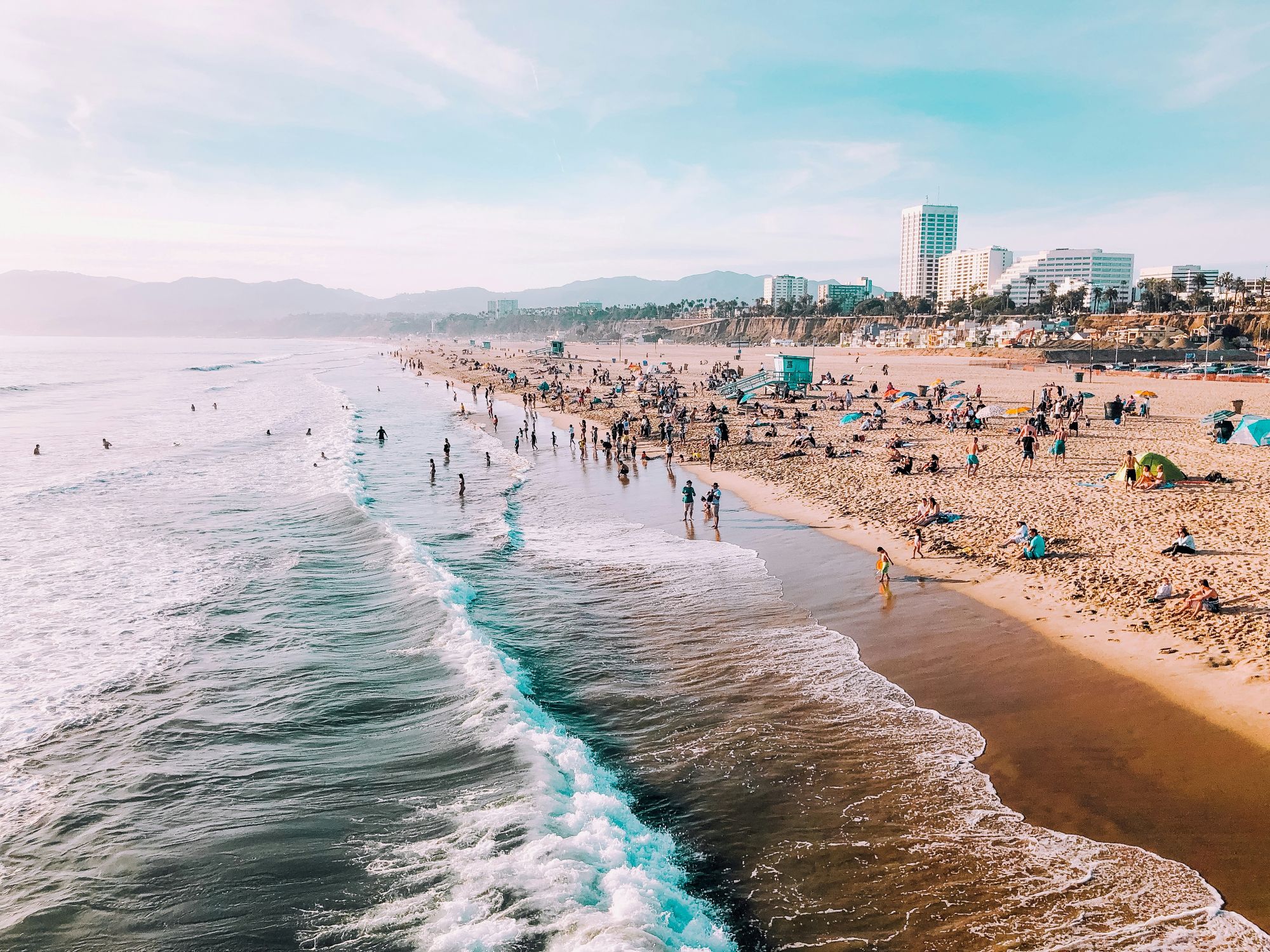
SANTA MONICA—The city of Santa Monica revealed that researchers from UCLA Samueli School of Engineering’s Coastal Flood Lab, in partnership with The Bay Foundation, will release a temporary, nontoxic pink dye into the ocean on Tuesday, September 29, to better understand water circulation around the breakwater and the Santa Monica Pier.
Weather permitting, the dye release will take place at approximately 11 a.m. Three additional dye releases are planned throughout October.
The dye is a harmless, EPA-approved fluorescent tracer dye that will allow researchers to track the water’s movements and wave-driven circulation. Researchers will monitor the bright pink plume with drones, a camera mounted on the pier mast, a remote-controlled survey boat that measures dye concentration, and instruments placed on the seafloor.
The researchers conducted four similar dye releases last fall as part of the ongoing study to better understand how the breakwater shapes currents, water quality, and the shoreline. Details on last year’s dye tracer experiment can be found here, along with an FAQ.
The experiment builds on years-long efforts by the city of Santa Monica and its partners to address ocean water quality beneath the Pier. Members of the public can see the pink dye from the Pier and/or shore for a couple of hours following the release.
The Bay Foundation is an entity of SMBNEP, one of 28 National Estuary Programs created by Congress in 1987. SMBNEP is dedicated to the preservation and restoration of coastal Los Angeles and promotes collaborative watershed-based partnerships and projects. The program’s Comprehensive Conservation and Management Plan (CCMP) is dedicated to ensuring a high quality of life for the 5,000 species and 4,000,000 people that call the Santa Monica Bay and its watershed home.
The city of Santa Monica is monitoring the potential impacts of Hurricane Polo and changing ocean and weather conditions along the coast. While current conditions remain manageable, city teams are prepared to respond if conditions change.
Residents and visitors are advised to follow any posted warnings and follow the National Weather Service at weather.gov for the latest weather and coastal condition updates.